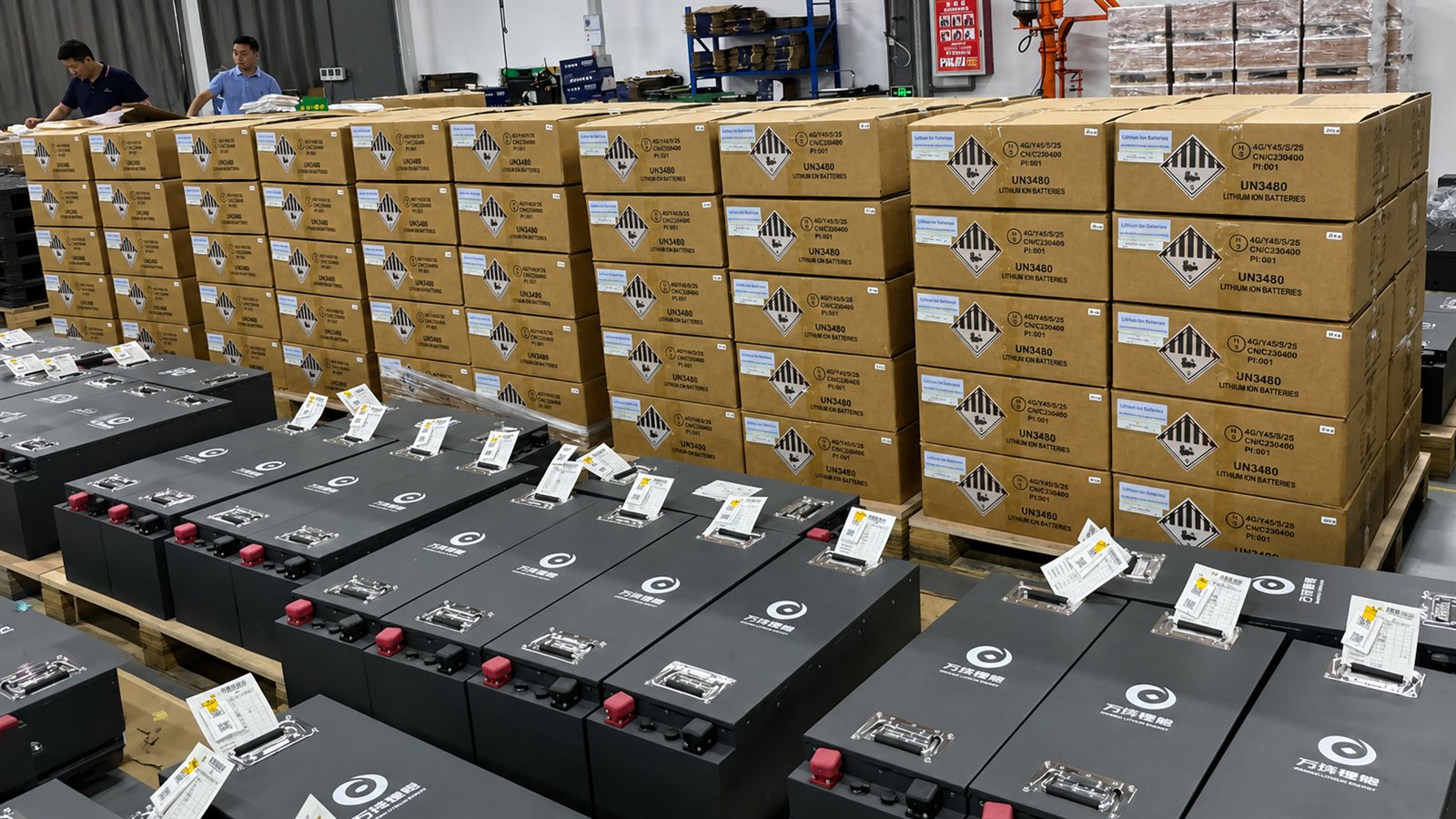
Importing lithium batteries from China to Africa is one of the fastest-growing trade corridors in the energy sector. With grid reliability challenges across Nigeria, Kenya, South Africa, Ghana, and dozens of other markets, demand for solar energy storage systems is accelerating rapidly.
But the process involves navigating international shipping regulations, dangerous goods classification, customs requirements, and quality verification — all while managing communication across time zones and languages.
This guide walks you through every step, from finding a manufacturer to clearing customs at your destination port.
Step 1: Define Your Product Requirements
Before contacting any manufacturer, document your specific needs:
Technical Specifications
- Voltage: 48V (residential) or high-voltage (commercial)?
- Capacity: What kWh range do your customers need?
- Form factor: Wall-mounted, floor-standing, or rack-mounted?
- Inverter compatibility: Which inverter brands are popular in your market?
- Certifications required: What does your country’s standards body require?
Business Parameters
- Order quantity: Are you starting with samples or going straight to bulk?
- Budget: What is your landed cost target per kWh?
- Timeline: When do you need the products delivered?
- Branding: Do you need OEM (your brand on the product)?
Having these answers ready before reaching out to manufacturers will save weeks of back-and-forth communication and help you get accurate quotations.
Step 2: Find and Verify a Manufacturer
Where to Search
- Alibaba/Made-in-China: Large directories, but quality varies enormously. Use as a starting point, not a final decision tool.
- Canton Fair: The biannual trade fair in Guangzhou is the best place to meet manufacturers face-to-face and inspect products.
- Industry referrals: Ask other importers, installers, or solar companies in your network who they source from.
- Direct outreach: Contact manufacturers through their websites or LinkedIn.
Red Flags to Watch For
- No factory photos or video — only product renders
- Unwillingness to provide cell test reports or certification documents
- Prices significantly below market average (usually means Grade B cells or recycled cells)
- No DG shipping experience
- Cannot provide references from African buyers
Verification Steps
- Request a video call to see the factory in real-time
- Ask for a third-party factory audit report (SGS, TUV, Bureau Veritas)
- Order a sample unit and test it against rated specifications
- Verify certifications by checking the issuing lab’s database
Step 3: Negotiate Terms and Place Your Order
Pricing Structure
Chinese manufacturers typically quote FOB (Free On Board) prices, meaning the price includes manufacturing and loading the container at the Chinese port (usually Shanghai, Shenzhen, or Guangzhou). You are responsible for ocean freight, insurance, and destination customs.
Key Terms to Negotiate
- MOQ (Minimum Order Quantity): Many manufacturers require 50–100 units for a first order. Some, like AEGIS Powers, accept sample orders as small as 1 unit and bulk orders from 10 units.
- Payment terms: Standard is 30% deposit, 70% before shipment. For established relationships, some manufacturers offer 30/70 with the balance payable after B/L (bill of lading) copy.
- Lead time: Typical production time is 15–30 days depending on order size and customization.
- Warranty terms: Get the warranty scope, duration, and claim process in writing. A 10-year warranty is industry standard for premium LiFePO4 systems.
OEM/ODM Considerations
If you want your own brand on the products:
- Logo and branding: Usually no extra cost; provide your logo in vector format (AI/EPS)
- Custom packaging: May require a small additional fee for first-order tooling
- Custom specifications: Voltage, capacity, or BMS configuration changes may require engineering fees and longer lead times
Step 4: Understand Lithium Battery Shipping Regulations
This is where many first-time importers make costly mistakes. Lithium batteries are classified as dangerous goods (DG) for international transport.
Key Regulations
- UN38.3 certification: Required for all lithium batteries shipped internationally. This test verifies the battery can withstand altitude, temperature, vibration, shock, short circuit, and impact without hazard.
- IMDG Code: The International Maritime Dangerous Goods Code governs ocean shipping. LiFePO4 batteries are typically classified as UN3480 (Class 9).
- Packaging: Must meet DG packaging standards — specific inner packaging, cushioning, and outer carton requirements.
- Documentation: MSDS (Material Safety Data Sheet), DG declaration, packing list with battery specifications.
Shipping Methods
- Ocean freight (FCL): Full container load. Most cost-effective for large orders. Transit time to Lagos: ~30-35 days from Shanghai.
- Ocean freight (LCL): Less than container load. Suitable for sample or small orders. Consolidated with other cargo.
- Air freight: Fast (3-5 days) but expensive and subject to stricter DG limits. Typically only used for urgent samples.
Choosing a Freight Forwarder
Work with a freight forwarder experienced in DG lithium battery shipments. Not all forwarders handle DG cargo. Ask specifically:
- “Do you handle UN3480 Class 9 shipments regularly?”
- “Can you provide door-to-door service to [your city]?”
- “What documentation do you need from the manufacturer?”
A good manufacturer will already have DG shipping documentation ready and can coordinate directly with your freight forwarder. At AEGIS Powers, we prepare all UN38.3 certificates, MSDS documents, and DG declarations as part of every shipment.
Step 5: Customs Clearance at Destination
Common HS Codes for Lithium Batteries
- 8507.60 — Lithium-ion accumulators (most common classification for LiFePO4 battery systems)
- Specific HS codes may vary by country — check with your customs broker
Documents Needed for Clearance
- Commercial invoice
- Packing list
- Bill of Lading (B/L)
- Certificate of Origin
- UN38.3 test report
- MSDS
- Import permits (if required by your country)
- Certification documents (CE, IEC 62619, etc.)
Country-Specific Notes
Nigeria:
- SON (Standards Organisation of Nigeria) requires SONCAP certification for imported products
- NCS (Nigeria Customs Service) clearance at Apapa or Tin Can Island ports
- Consider using a bonded warehouse for staged clearance on large shipments
Kenya:
- KEBS (Kenya Bureau of Standards) pre-export verification of conformity (PVoC) program
- Mandatory through appointed inspection agencies (SGS, Intertek, Bureau Veritas)
South Africa:
- NRCS (National Regulator for Compulsory Specifications) compliance
- SARS (South African Revenue Service) for customs duties
- Relatively straightforward for lithium batteries with proper documentation
Step 6: After-Sales and Warranty Management
The relationship with your manufacturer doesn’t end at delivery. Plan for:
- Technical support: Ensure your manufacturer provides remote technical support via WhatsApp, WeChat, or email. Installation guidance, troubleshooting, and firmware updates should be readily available.
- Warranty claims: Understand the claim process before you need it. What evidence is required? Who pays return shipping? What is the turnaround time for replacements?
- Spare parts: For commercial and industrial systems, confirm availability of replacement BMS boards, cables, and connectors.
- Marketing support: Good manufacturers provide product images, videos, datasheets, and brochures that you can use for your own sales efforts.
Common Mistakes to Avoid
- Choosing on price alone. The cheapest quote almost always uses Grade B or recycled cells. You’ll pay for it in returns, warranty claims, and reputation damage.
- Skipping the sample step. Always test before committing to a bulk order. Measure actual capacity, check BMS functions, test inverter compatibility.
- Ignoring DG shipping requirements. Improperly documented lithium battery shipments can be seized at port, fined, or refused by carriers.
- No written warranty agreement. Verbal promises are worthless in international trade. Get warranty terms, scope, and claim procedures in a signed agreement.
- Underestimating customs timelines. Budget 2–4 weeks for customs clearance in most African ports. Factor this into your delivery promises to customers.
Conclusion
Importing solar batteries from China to Africa is a profitable and growing business — but it requires careful supplier selection, regulatory compliance, and logistics planning. The manufacturers that succeed in this corridor are the ones who treat African buyers as long-term partners, not one-time transactions.
If you’re looking for a manufacturing partner with proven shipping routes to Africa, flexible order quantities, and comprehensive after-sales support, contact AEGIS Powers to discuss your requirements. We provide free samples for qualified distributors and handle all DG documentation and logistics coordination.
Ready to Power Your Project?
Get a free quote within 24 hours. Our team is ready to help you find the right energy storage solution.